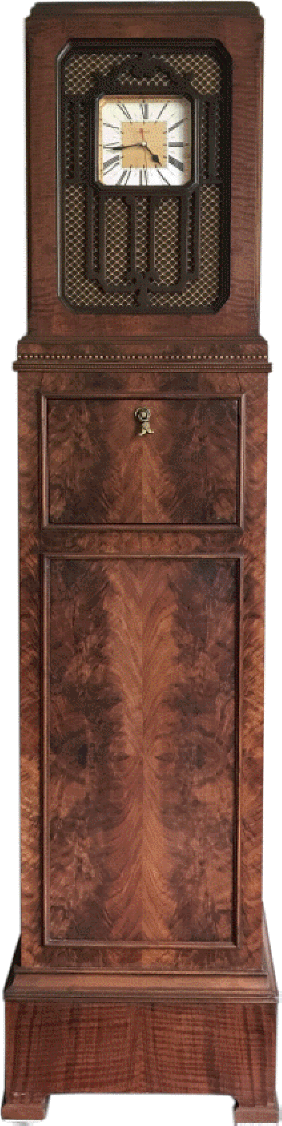
Historical BackgroundThe Rise of DeForest CrosleyDuring the late 1920s and early 1930s, DeForest Crosley Radio Corporation emerged as one of the largest and most influential radio manufacturers in Canada and the British Empire. Operating from extensive production facilities in Toronto, the company manufactured radios, speakers, cabinets, transformers, and related electrical products. The company was formed through a merger of two important names in early radio history: · The DeForest Radio interests associated with pioneering inventor Lee De Forest · The Crosley manufacturing organization founded by American radio entrepreneur Powel Crosley Jr. Although the Canadian operation eventually became largely independent of the American Crosley enterprise, the DeForest Crosley brand retained strong market recognition throughout Canada. By the early 1930s, DeForest Crosley was producing a broad range of products including: · Mantel radios · Cathedral radios · Console radios · Combination furniture radios · Luxury showcase receivers The Model 850 represented one of the company’s most ambitious luxury designs. Consolidated Industries LimitedOne of the most historically significant aspects of the subject radio is the presence of the “Consolidated Industries Ltd.” marking stamped upon the chassis. In 1931, DeForest Crosley became part of a larger corporate reorganization under the leadership of Major James E. Hahn. This new holding company — Consolidated Industries Limited — unified several electrical and appliance interests under a single corporate structure. The organization included: · DeForest Crosley Radio · Hammond electric clocks · Norge refrigerators · Appliance and financing divisions This relationship is particularly important when evaluating the Model 850 because the cabinet incorporated an electric clock assembly that was likely supplied through Hammond clock manufacturing interests connected to Consolidated Industries. As a result, the Model 850 stands as an excellent example of early integrated home entertainment and appliance design. The radio therefore represents: · Canadian radio manufacturing history · Early Depression-era luxury furniture styling · Corporate consolidation within the Canadian electronics industry · One of the earliest large-format clock-radio combinations produced in Canada Design and StylingA Luxury Furniture RadioThe Model 850 was designed not merely as a radio receiver, but as a decorative furnishing intended to occupy a prominent place within the home. Its tall “grandmother clock” cabinet drew inspiration from: · Traditional longcase clocks · Art Deco architectural lines · Fine furniture trends of the late 1920s · Luxury urban apartment furnishings The design allowed consumers to justify the purchase of an expensive radio during difficult economic times by presenting the set as both: · a useful household appliance, and · a fine furniture investment. The cabinet typically featured: · Vertical walnut veneer surfaces · Contrasting trim veneers · Decorative grille work · An illuminated or highly visible clock dial · Elegant proportions uncommon among standard radio consoles Because of its height and narrow profile, the Model 850 remains instantly recognizable among Canadian collectors. Technical OverviewThe DeForest Crosley Model 850 employed advanced radio technology for its time. Technical Features
The use of an 8-tube chassis placed the Model 850 above entry-level radios of the period. The receiver would have delivered strong reception and relatively powerful audio output suitable for medium to large rooms. The push-pull audio stage in particular suggests that DeForest Crosley intended the radio to compete within the premium market segment. Original Retail PriceAlthough surviving dealer literature specifically listing the Model 850 retail price remains scarce, comparison with contemporary DeForest Crosley console receivers suggests an estimated original selling price between: $175 – $250 CAD (1931)This represented a substantial financial commitment during the Great Depression. Using modern inflation comparisons, this price range is approximately equivalent to: $3,800 – $5,000+ CAD in modern purchasing powerThe Model 850 therefore occupied the luxury end of the Canadian radio market. Factory Advertising and Surviving LiteratureOriginal advertising for the Model 850 and related DeForest Crosley products does survive in limited quantities. Surviving publications from 1931 reference: “DE FOREST CROSLEY RADIO — A PRODUCT OF CONSOLIDATED INDUSTRIES” Advertising materials from this period promoted: · DeForest Crosley radios · Hammond clocks · Norge refrigerators · Modern electric household convenience The Model 850 itself appears only rarely in surviving advertisements, likely due to: · relatively low production, · premium pricing, · and limited Depression-era distribution. Surviving factory photography and catalog imagery indicate that the Model 850 was marketed as an elegant lifestyle product rather than a purely technical appliance. Rarity and Survival RateThe DeForest Crosley Model 850 is considered rare within the Canadian collector community. Several factors contribute to this rarity: 1. Low Original ProductionSpecialty furniture radios generally sold in far smaller numbers than conventional consoles or mantel radios. 2. Cabinet FragilityThe tall cabinet design was vulnerable to: · veneer separation, · moisture damage, · transportation breakage, · and structural weakening. 3. Clock Mechanism FailuresMany surviving examples lost or damaged their clock assemblies over time. 4. Large Physical SizeLarge floor models were often discarded during the 1950s and 1960s as consumer tastes changed. As a result, complete and professionally restored examples are seldom encountered. Collector InterestAmong collectors of Canadian radios, the Model 850 is considered highly desirable because it combines: · Strong visual impact · Art Deco styling · Early Canadian manufacture · Scarcity · Historical significance · Novelty as an early clock radio · Large display presence The radio appeals to several collector categories simultaneously: · Canadian radio collectors · Art Deco collectors · Furniture radio collectors · Clock collectors · Museum and design historians Its unusual cabinet design ensures strong visual interest at radio exhibitions and vintage technology events. Condition Assessment of Subject RadioBased upon the information provided, the subject radio has undergone significant professional restoration. Reported restoration work includes: Electronic Restoration· Capacitor replacement · Electrical safety servicing · Functional operation restoration · Reliable day-to-day operation Cabinet Restoration· Professional refinishing · Structural preservation · Veneer restoration · Cosmetic enhancement while preserving original appearance Modern Integration· External Bluetooth/FM module · Capability to stream modern audio · Preservation of historical usability The addition of tasteful Bluetooth integration is increasingly accepted within the collector market when: · the modification is reversible, · original circuitry remains intact, · and the external appearance remains historically accurate. Because many collectors wish to actively use vintage radios rather than merely display them, discreet modern integration can increase practical desirability. Current Market AnalysisPublic sales records for the Model 850 are extremely limited. This scarcity itself supports the conclusion that surviving examples are uncommon. Comparable sales involving Canadian Depression-era specialty consoles suggest the following approximate value ranges:
The subject radio appears to fall within the upper restoration category due to: · professional refinishing, · complete restoration, · rarity, · visual presentation, · and retained originality. Final AppraisalAfter consideration of: · rarity, · historical significance, · originality, · restoration quality, · collector demand, · current Canadian collector trends, · and comparable specialty radio sales, it is my opinion that the fair current market value of the subject radio is: Final Appraised Value4,000 – $6,000 CADInsurance replacement value for an equivalent
$6,550 CADparticularly if the radio were marketed
internationally to Historical Significance SummaryThe 1931 DeForest Crosley Model 850 represents a fascinating moment in Canadian industrial history when radio manufacturers sought to transform radios from simple appliances into luxury household furnishings. The subject radio combines: · Canadian manufacturing heritage · Early electrical appliance integration · Depression-era industrial design · Advanced radio engineering for its period · Strong visual Art Deco styling · Rare surviving originality Its connection to Consolidated Industries Limited further enhances its historical importance by linking the set directly to the broader consolidation of Canada’s early electrical manufacturing sector. Today, surviving examples stand among the most visually distinctive and historically important Canadian radios of the early 1930s. Suggested Insurance Description1931 DeForest Crosley Model 850 Grandmother Clock Radio, serial number 8504943, manufactured in Toronto, Ontario, Canada. Rare 8-tube Art Deco floor-standing clock-radio combination produced during the early Depression era under Consolidated Industries Limited. Professionally refinished cabinet with complete electronic restoration and tasteful Bluetooth/FM integration. Significant collector interest due to rarity, visual presentation, and historical importance within Canadian radio manufacturing history. References and Historical SourcesResearch compiled from: · Radiomuseum archives · World Radio History publications · Canadian vintage radio collector records · Historical advertising archives · Auction and collector market observations · Early Canadian radio manufacturing documentation End of Report |